
-
For years, supply-chain transformation programs were built on a simple belief: more data would produce faster, better decisions. Companies invested in control towers, predictive analytics, real-time visibility, and AI with the expectation that better information would naturally improve execution. But as Supply Chain Management Review argues, the constraint has shifted. Many supply chains are now data-rich, yet still slow to act because decision processes have not evolved at the same pace as data capabilities.
The problem
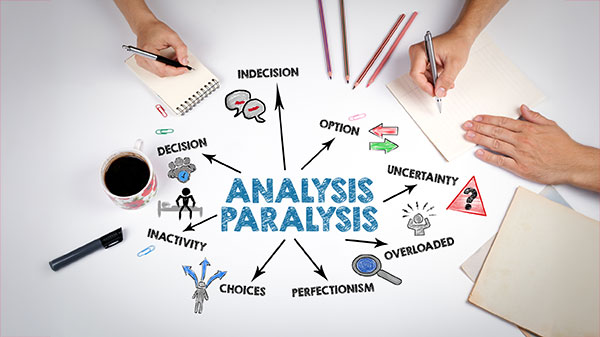
The case is not about a single company failure. It is about a pattern showing up across modern supply chains: three dashboards can all be accurate and still fail to produce a decision. SCMR’s framing is sharp. The issue is no longer data scarcity, but a widening “insight-to-action gap” in which organizations generate more signals than they can operationalize in time. In an environment of continuous disruption, that delay matters because a late response can erase the value of even an accurate forecast.
SCMR identifies three recurring causes. First, KPIs often conflict across functions: procurement may optimize for cost, operations for throughput, and customer teams for service levels. Second, decision ownership is unclear, so issues move “up and sideways” instead of being resolved where they appear. Third, more data often leads to more validation, more cross-checks, and more alignment meetings, which slows action even when the core signal is already visible.
Why this becomes a structural supply-chain issue
What makes this a real operating problem is that the cost is rarely visible as a single line item. It shows up as slower exception response, longer escalation cycles, repeated meetings, and delayed action on inventory, capacity, allocation, or supplier adjustments. SCMR’s argument is that better visibility can actually expose more functional differences, which then require more alignment. Without clear rules on who decides and which metric takes priority, organizations become better informed but less decisive.
That is the key shift. The modern supply-chain bottleneck is not lack of dashboards. It is lack of decision architecture. This is why the article argues leaders should stop asking only how to improve visibility and start asking how to improve decision speed and clarity.
What winning organizations are doing differently
SCMR points to three examples that illustrate a more decision-centric design model. UPS’s Harmonized Enterprise Analytics Tool, or HEAT, is cited not just for ingesting more than a billion data points per day, but for supporting specific operational decisions such as routing and capacity allocation in near real time. The value comes from embedding the right signals into day-to-day operating routines rather than presenting all available data.
PepsiCo is presented as another strong example. Instead of building a broad analytics hub, it focused on one concrete decision: predicting and preventing out-of-stocks at the store level. SCMR says PepsiCo’s AI-driven demand forecasting achieved about 98% accuracy for most products and reduced truck stock-outs by roughly 4%, while improving order size and product mix on delivery routes. The case supports a simple point: analytics creates more value when it is tied to a narrow, high-impact decision and a clear playbook for action.
Pfizer’s Global Supply Digital Operations Center reinforces the same lesson. SCMR describes it as a virtual cockpit for manufacturing and supply that gives teams a shared end-to-end view across sites. Pfizer reports the center has reduced cycle time in some areas and improved how manufacturing teams collaborate, predict issues, and adjust in real time. Again, the pattern is consistent: technology matters, but its real value comes when data is organized around intervention, not observation alone.
The operating lesson
Taken together, these examples point to a broader conclusion: the organizations getting the most from analytics are not the ones with the most data, but the ones that have redesigned work around a small number of critical decisions. SCMR explicitly recommends defining, for each critical decision, who owns it, how quickly it must be made, and which metrics take priority when trade-offs arise. It also advises tying each dashboard to a specific action and cadence, and retiring dashboards that do not clearly answer what should be done next.
This is what makes the article case-study worthy. It reframes analytics maturity not as a reporting problem, but as an execution problem. The real advantage is shifting from data-rich to decision-ready. That final phrasing comes directly from SCMR’s closing argument that the next supply-chain edge is not having more data, but knowing who decides, how fast, and based on which signals.
Why this matters for supply-chain leaders
Most transformation programs still invest heavily in visibility, forecasting, and AI. SCMR’s article suggests that those investments deliver diminishing returns when ownership, metric hierarchy, and decision rights remain vague. In practice, that means the next performance gains may come less from adding another layer of analytics and more from redesigning how decisions are made under pressure.
Why it matters:
The next competitive advantage in supply chain may not come from who sees the most. It may come from who can convert the same signal into a clear decision faster, with less escalation and less noise. This final sentence is an inference grounded in SCMR’s analysis and examples.